1. What is ThingIQ?
2. IoT platform ThingIQ
3. Integrate AI with ThingIQ
4. Conclusion
1. What is about ThingIQ?
“UPGRADE YOUR IOT FUTURE”
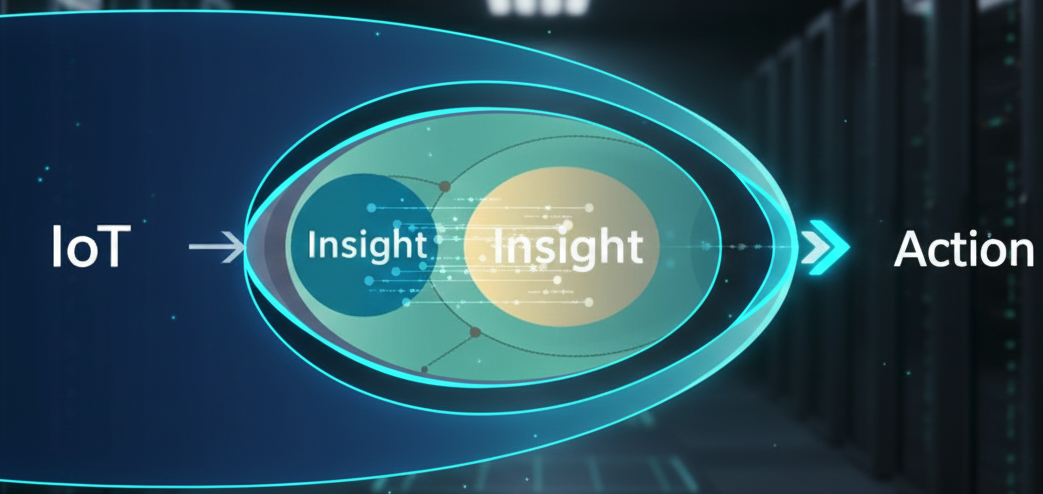
Market tendency – Insight – Action
Over the past decade, the Internet of Things (IoT) has undergone rapid development, from simple monitoring systems to infrastructures connecting millions of devices. However, as IoT matures, the core challenge is no longer data collection, but the ability to transform that data into tangible operational value.
The explosion of sensor data, real-time data, and complex data streams has rendered traditional management models ineffective. In this context, integrating artificial intelligence (AI) into IoT platforms is no longer a trend, but a necessary market requirement.
Faced with this reality, ThingIQ defines its vision: to build an IoT platform that not only connects devices but also supports businesses in making intelligent decisions based on data and AI. Instead of focusing on purely displaying data, ThingIQ’s vision is to bridge the gap between operational data and action, where analytical models and machine learning play a central role in anomaly detection, trend prediction, and system performance optimization. Therefore, the ThingIQ platform is conceived as an AI-integrated IoT solution right from the architectural design stage. Instead of building a connected system and then adding AI later, ThingIQ is developed with an AI-first philosophy, where IoT data is processed, analyzed, and continuously learned to generate actionable insights.

ThingIQ is geared towards large-scale IoT systems where stability, scalability, and integration with existing infrastructure are essential. Based on this vision, ThingIQ is built with a clear layered architecture, enabling real-time collection, processing, and analysis of IoT data, while integrating AI models to support intelligent operation.
2. IoT platform ThingIQ
As IoT systems expand from the experimental stage to real-world deployment, businesses quickly face systemic challenges. These pain points don’t stem from individual devices, but rather from management, operation, the environment, and integration capabilities across the entire IoT infrastructure.
ThingIQ is built to directly address these issues through three core solution groups:
- Intelligent Management & Operations;
- Environmental & Security Solutions;
- IoT Connectivity & API Integration.
For businesses operating hundreds to thousands of dispersed assets such as vehicle fleets, machinery, and industrial equipment, data often comes from multiple sources and protocols, lacking standardization and difficult to utilize effectively. Manual monitoring leads to slow response times, reactive maintenance, and uncontrollable costs. ThingIQ addresses this problem with its intelligent Management & Operations platform, enabling real-time fleet monitoring (GPS, speed, fuel level, engine status via OBD-II and LTE SIM) as well as continuous monitoring of industrial equipment. Data is standardized and processed on an IoT cloud platform, enabling businesses to remotely monitor, analyze operating behavior, support predictive maintenance, and improve asset utilization efficiency.
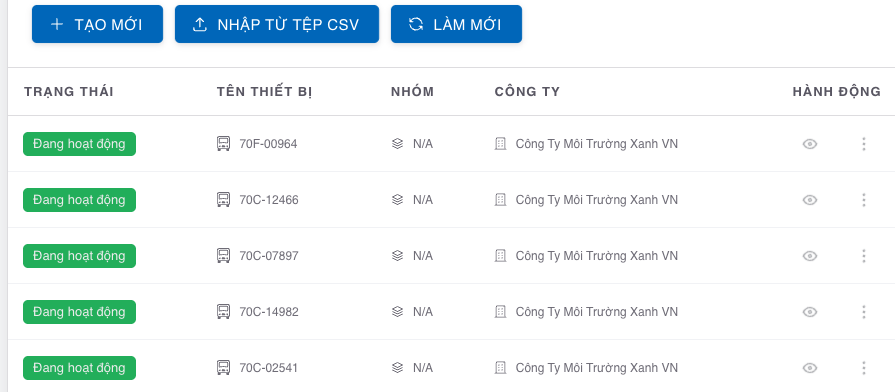
Devices Management interface ThingIQ
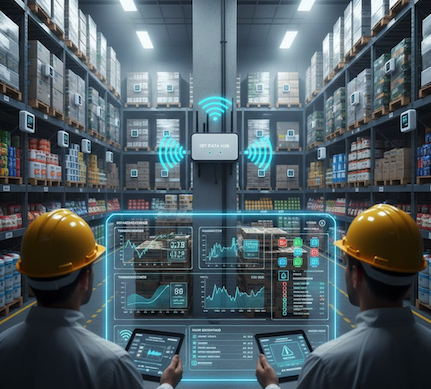
In environments such as smart buildings, factories, and cold storage facilities, a lack of real-time environmental monitoring can lead to significant risks to quality, safety, and energy waste. Temperature, humidity, and energy consumption data are often fragmented, making it difficult for businesses to meet increasingly stringent standards. ThingIQ provides a comprehensive building, energy, and environmental management solution that enables real-time data monitoring and analysis, operational automation, and threshold alerts. This allows businesses to ensure compliance, protect product quality, reduce risks, and move towards sustainable operations at optimal cost.
In recent years, air quality in Hanoi has consistently been poor, especially during transitional seasons and peak traffic times, with concentrations of fine particulate matter and air pollutants exceeding recommended levels. This situation not only affects public health but also directly impacts labor productivity and the quality of life. ThingIQ’s IoT-based air quality monitoring solution allows for continuous real-time tracking of pollution indicators, CO₂, humidity, and temperature, enabling businesses, urban areas, and management agencies to proactively assess risks, issue early warnings, and implement timely and effective environmental improvement measures.
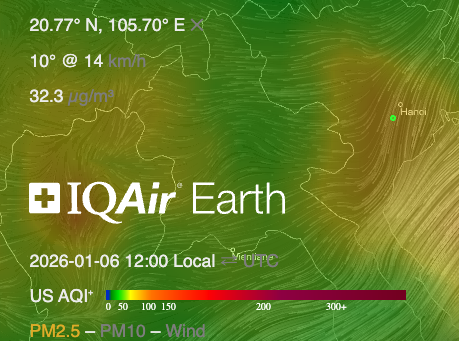
Air quality in Hanoi at the beginning of 2026
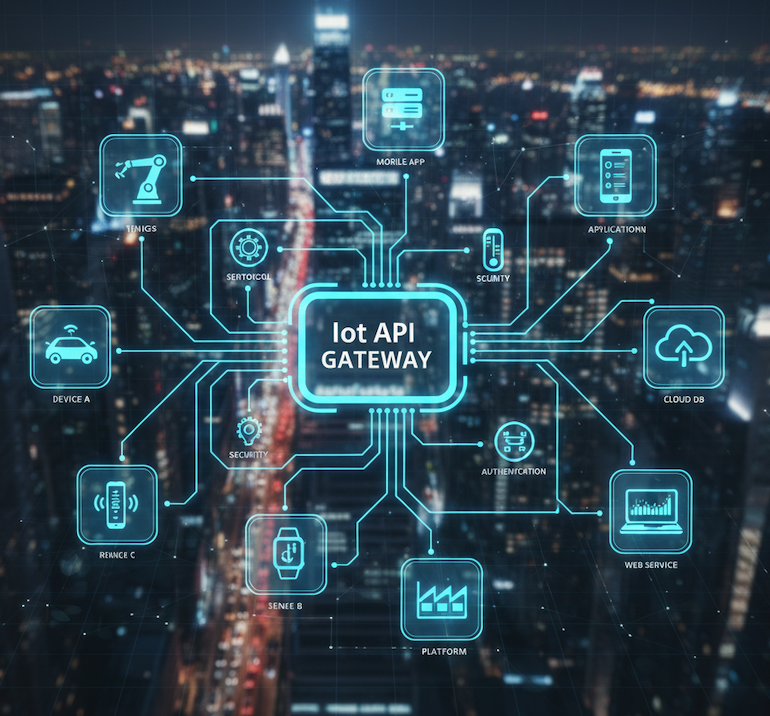
One of the biggest challenges for enterprise IoT is the fragmentation of devices, protocols, and systems, which isolates data and makes integration with existing platforms like ERP, MES, or BI difficult. ThingIQ addresses this problem through its IoT API Gateway – a secure and scalable middleware that bridges devices, cloud platforms, and enterprise applications. The gateway supports protocol conversion, centralized device management, and real-time data exchange, enabling businesses to seamlessly integrate IoT ecosystems, maintain openness and scalability, and ensure long-term data security.
3. AI in ThingIQ
ThingIQ integrates AI as a foundational component in its IoT architecture, transforming multi-source sensor and operational data into exploitable knowledge. Machine learning models are deployed directly in the data processing pipeline, allowing the system to learn from the real-world operating behavior of devices and the environment, rather than relying on thresholds or static rules.
The AI in ThingIQ focuses on core analytical problems of enterprise IoT, including contextual anomaly detection, trend analysis, and device state prediction. Through learning from historical and real-time data, the platform supports predictive maintenance, reduces unplanned downtime, and optimizes asset lifecycles.
ThingIQ’s approach aims for AI that is controllable and explainable, ensuring compliance with operational requirements and data security. AI not only serves for display purposes, but also acts as a decision support layer, helping businesses shift from passive monitoring to proactive, data-driven operations.
For example, when comparing two systems, one with AI integration and one without, the advantages of AI applications become clear:
- For IoT systems without AI: Traditional systems are primarily based on data collection and fixed thresholds. Sensors send data (temperature, humidity, equipment status) to a central platform, where the data is displayed on a dashboard and triggers alerts when predefined thresholds are exceeded. This approach is suitable for basic monitoring but is limited in complex operating environments where operating conditions change constantly. The system only reacts after an incident has occurred, easily leading to false alarms and making it difficult to support optimal operation or proactive maintenance.
- Case 2: IoT systems with AI (ThingIQ) are integrated into the ThingIQ platform. IoT data is not only monitored but also analyzed contextually. Machine learning models study the normal operating behavior of equipment and the environment, thereby detecting anomalies early even before values exceed thresholds. AI allows for forecasting trends and equipment status, supporting predictive maintenance and operational optimization. Instead of reacting passively, businesses can proactively make decisions based on data and forecasts.
From there, we get a comparison table to better understand the AI features:

4. Conclusion
In the short term, ThingIQ focuses on developing and deploying comprehensive IoT solutions, helping businesses quickly solve real-world operational challenges, optimize asset, environmental, and system management, while ensuring flexible and stable deployment.
In the long term, ThingIQ aims to build an AI-integrated IoT platform as the core data infrastructure for businesses, where data is analyzed in depth to support intelligent decision-making, operational automation, and sustainable growth.
In terms of expertise and commitment, the ThingIQ team possesses comprehensive capabilities ranging from hardware design and development, IoT connectivity system deployment, to cloud integration and operation. By leveraging advanced connectivity protocols and in-depth data analysis, we deliver smarter, more efficient, and future-ready industrial solutions.
ThingIQ is committed to quality, innovation, and customer satisfaction at every stage, from design and implementation to system operation and scaling!