1. Introduction: The Future of Predictive Maintenance
2. Ultra Low Power Edge AI Device (Voyager4-based)
3. End-to-End IoT Architecture (Device → Cloud → AI)
3.1. Edge Layer (Sensor Node)
3.2. Gateway Layer
3.3. Cloud Layer (ThingIQ Platform)
4. Powerful Dashboard & Web Console
5. Mobile App (Operator-Friendly)
6. AI Model & Dataset Management (Cloud → Edge)
6.1.Dataset Management
6.2 Model Training Pipeline
6.3.Model Deployment to Device
6.4.Continuous Learning Loop
7. Edge AI Inference (Real-Time, Offline)
8. Security & Device Management
9. Custom IoT + AI Solutions by IES
10. Key Advantages (SEO + Sales Focus)
11. Use Cases
12. Call To Action
1. Introduction: The Future of Predictive Maintenance
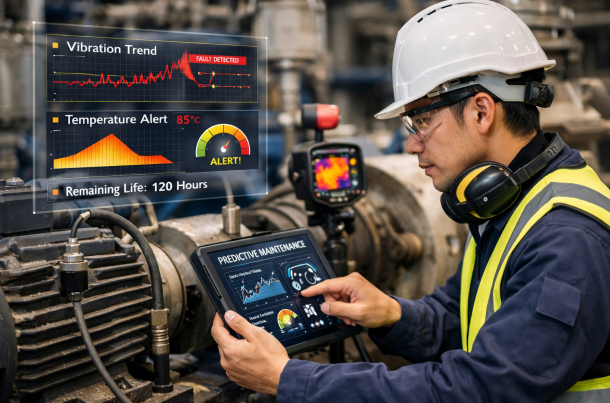
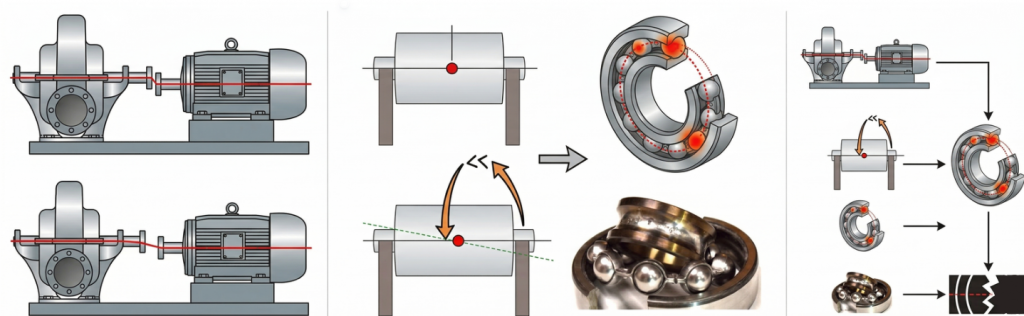
In the era of Industry 4.0, Predictive Maintenance is becoming a core platform helping businesses shift from routine maintenance to predictive maintenance based on real-time data. Instead of waiting for equipment to break down before repairing it, the system continuously collects data on vibration, temperature, current, and sound to detect early signs of abnormalities such as bearing wear, imbalance, and misalignment. As a result, businesses can reduce downtime by 30–50%, optimize operating costs, and increase equipment lifespan.
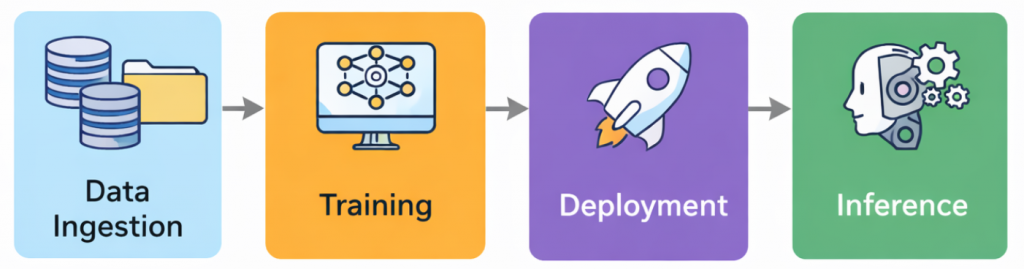
IES’ solution provides a complete end-to-end Industrial IoT + AI platform, seamlessly connecting edge devices to the cloud and AI pipeline. Data is collected from ultra-low-power edge devices, transmitted through an industrial gateway, and uploaded to the ThingIQ cloud platform for storage, processing, and analysis. Here, the AI pipeline handles the entire process from data ingestion → training → deployment → inference, enabling direct model deployment to devices and centralized AI lifecycle management.
The system’s strength lies in its real-time monitoring and closed-loop AI deployment capabilities: data from devices continuously improves the model, and new models can be updated back to the edge device in just a few steps. This helps businesses achieve predictive maintenance at scale with superior scalability, security, and cost efficiency.
2. Ultra Low Power Edge AI Device (Voyager4-based)
Voyager4 is an Edge AI sensor node platform designed for industrial environments, enabling on-site machine fault detection with extremely low power consumption. The device can operate on batteries for many years or solar power, allowing for rapid Predictive Maintenance deployment without the need for complex wiring or IT infrastructure.
Unlike traditional IoT systems that send all data to the cloud for analysis, Voyager4 offers direct AI inference at the edge, reducing latency, saving bandwidth, and ensuring the security of production data.
| Capability | Description | Business Value |
|---|---|---|
| Ultra-Low Power Operation | Optimized hardware and firmware designed for long-term autonomous operation using battery or solar power. Suitable for hard-to-reach industrial assets. | Enables large-scale deployment without power wiring. Reduces installation and maintenance cost. |
| Edge AI Inference | AI models run directly on the device, detecting anomalies and faults in real time without requiring continuous cloud connectivity. | Instant fault detection, lower latency, improved OT security, and reduced bandwidth usage. |
| BLE Streaming + AI Mode | Dual operating modes: stream raw vibration data for analysis and training, or run autonomous AI detection for 24/7 monitoring. Modes can be switched via software. | Supports full lifecycle from data collection to scalable deployment with minimal operational overhead. |
| OTA Firmware & Model Updates | Remote firmware upgrades and over-the-air AI model deployment without physical access to devices. | Continuous improvement, simplified fleet management, and reduced field service costs. |
Voyager4 is built on Analog Devices’ chip platform, optimized for AI and ultra-low power; it’s not a “single sensor.” It’s a complete Edge AI system, where each chip has its own role in the pipeline:
Sense → Control → Think → Communicate
These three hardware components work together to form an autonomous AI sensor node. Voyager4 performs the entire fault detection process within the device itself. From vibration measurement → signal processing → AI execution → alert sending, all happens in milliseconds with extremely low power consumption.
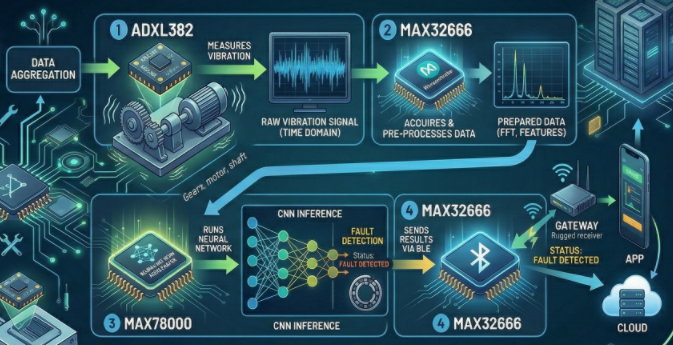
Step 1 — Vibration Sensing (ADXL382)
The process begins when the vibration sensor continuously measures the machine’s mechanical movement.
ADXL382 collects:
- High-frequency vibration waveform
- Micro-vibration signatures
- Mechanical fault fingerprints
These very small vibrations are early signs of malfunctions such as bearing wear, imbalance, or misalignment; a raw vibration signal is obtained.
Step 2 — Edge Pre-Processing (MAX32666)
Raw vibration data cannot be directly fed into AI.
MAX32666 performs the signal conditioning and feature preparation steps:
Main tasks:
- Noise filtering
- Windowing and segmentation
- FFT / Spectrogram generation
- Feature packaging for neural networks
After this step, the vibration signal is converted into an AI-ready feature map. This step transforms physical data into data understandable by AI.
Step 3 — Neural Network Inference (MAX78000)
The processed data is transferred to the MAX78000 – a dedicated AI processor.
- The CNN accelerator runs a neural network.
- It analyzes vibration patterns in real time.
- It compares them with learned patterns.
The model will calculate:
- The machine’s health score.
- The probability of anomalies.
- The type of error that could occur.
The entire inference process takes place in milliseconds with extremely low power consumption.
Step 4 — Smart Communication via BLE
After the AI reaches a conclusion, MAX32666 will decide on a course of action:
If the device is functioning normally: The device returns to sleep mode to save battery power.
If an anomaly is detected:
- Sends an alert via BLE to the Gateway / Mobile App / Cloud.
- Transmits health score and fault metadata.
- Activates the alert process.
The device only transmits data when necessary → reducing bandwidth and extending battery life.
3. End-to-End IoT Architecture (Device → Cloud → AI)
The solution is built on a 3-layer Industrial IoT architecture, enabling the deployment of Predictive Maintenance from a single device to thousands of devices across multiple factories. This architecture allows businesses to start small and scale gradually without changing their infrastructure.
The system creates a seamless data flow from Edge → Gateway → Cloud → AI → back to Edge. Data is collected at the device, analyzed by AI, and continuously improved in real time.
The architecture consists of three main layers: Edge Layer (Sensor Node), Gateway Layer (Secure Bridge), and Cloud Layer (ThingIQ Platform). Each layer plays a distinct role but works closely together to create a unified system. The combination of these three layers provides real-time monitoring, large-scale deployment, and optimized operating costs for Predictive Maintenance.
3.1. Edge Layer (Sensor Node)
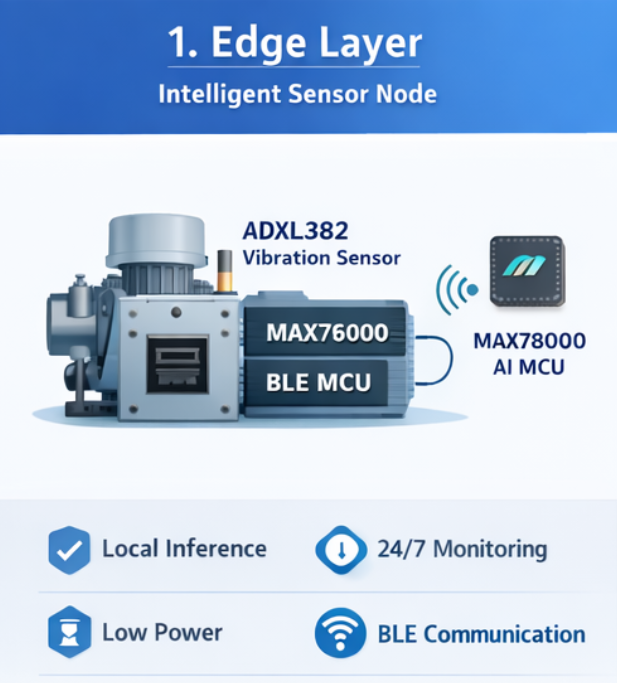
The Edge Layer is the layer closest to the machinery, where data is collected and analyzed at the source. Each sensor node integrates a vibration sensor and an Edge AI MCU, enabling local AI inference for fault detection without relying on the cloud, while using BLE communication to transmit results to the gateway.
The device acts as an “AI watchdog,” continuously monitoring the machinery. The sensor node measures vibration and runs AI 24/7 to detect anomalies as soon as they occur, helping businesses shift from reactive to predictive maintenance. Thanks to on-site decision-making capabilities, the system can detect faults immediately without waiting for cloud analysis, reducing latency and increasing reliability.
In addition, the device is optimized for ultra-low power, capable of operating on battery power for many years, enabling rapid large-scale deployment without the need for complex power infrastructure. Inference results are then wirelessly transmitted via BLE to the gateway for further processing at the upper layers.
The Edge Layer is where real-time machine intelligence is created, transforming vibration data into action right on the scene.
3.2. Gateway Layer
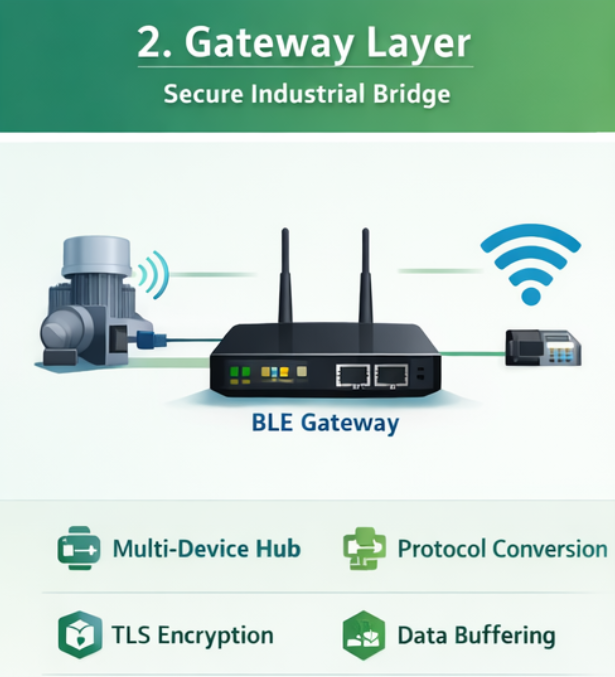
The gateway acts as a bridge between the factory’s OT network and the cloud platform, ensuring that data from sensor nodes is collected, converted, and transmitted securely. The gateway device functions as a BLE Central, capable of connecting multiple sensor nodes simultaneously, collecting data from the entire production area, and supporting remote device management.
At this layer, protocol conversion takes place, transforming data from the OT environment to the IT environment. The gateway receives data via BLE and forwards it to internet connection protocols such as Wi-Fi or Ethernet, while also packaging the data using MQTT or HTTPS standards for transmission to the cloud.
The gateway also plays a role in security and ensuring system continuity. All data is encrypted using TLS, devices are authenticated before connection, and data is transmitted through a secure tunnel to the cloud. In case of network disconnection, the gateway can buffer data locally and automatically resynchronize when the network is stable.
The Gateway Layer ensures that data is transmitted securely, reliably, and continuously, creating a reliable foundation for the entire Predictive Maintenance system.
3.3. Cloud Layer (ThingIQ Platform)
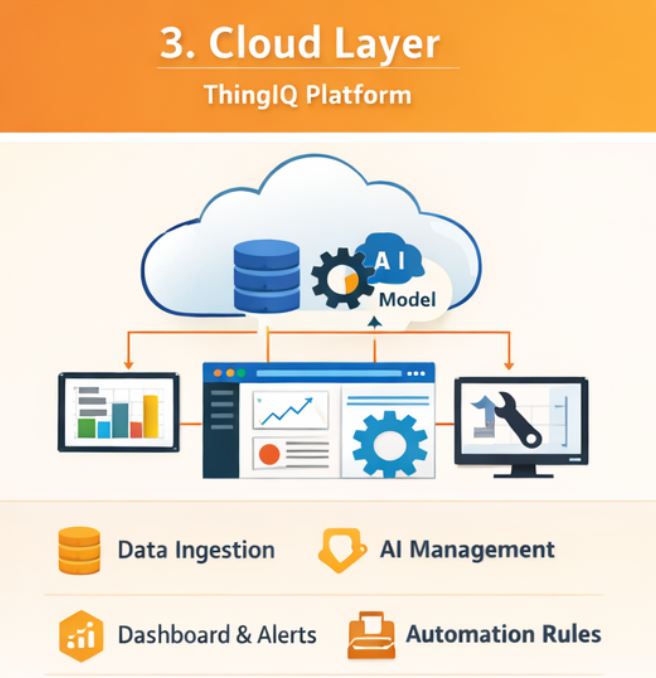
The cloud serves as the central hub for managing, analyzing, and coordinating the entire Predictive Maintenance system. It’s where data from the plant is centralized, transformed into valuable information, and translated into actionable strategies.
At this layer, data from the gateway is received via MQTT streaming and REST APIs, then stored as industrial time-series data for real-time and historical analysis. The cloud platform also manages the entire AI model lifecycle, from dataset collection, model training and validation, version management, to OTA deployment to edge devices. This enables the system to become increasingly intelligent as it operates.
WebConsole provides a comprehensive dashboard and analytics toolset, allowing for monitoring of plant-wide machinery status within a single interface. Users can view an overview of the equipment fleet, monitor health scores in real time, predict failures, and analyze historical data to optimize maintenance strategies.
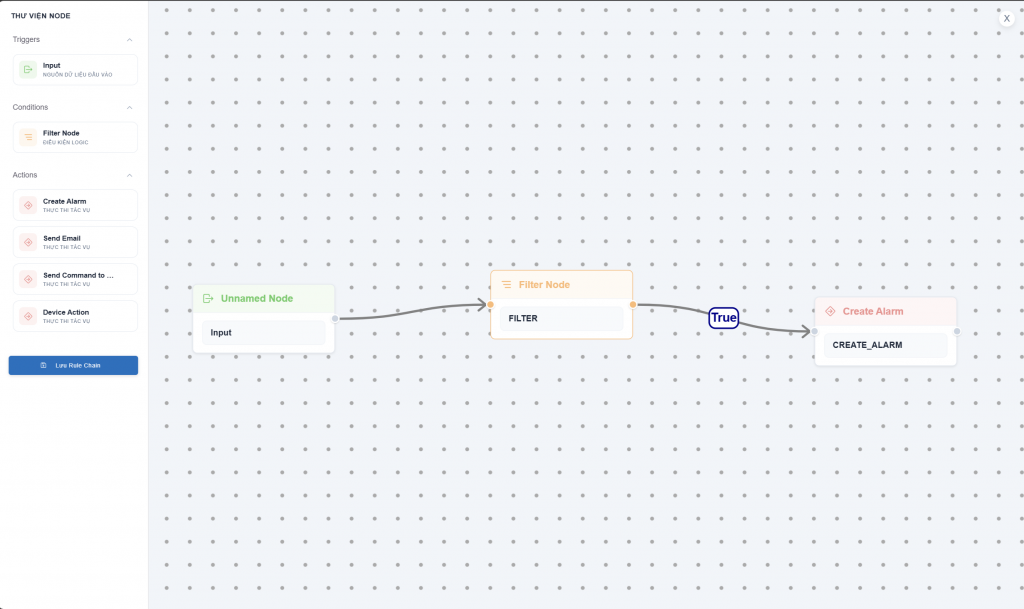
Furthermore, the platform integrates a rule engine to automate operational processes. For example, the system can automatically generate maintenance tickets when the health score drops, send emails/SMS when serious anomalies are detected, or notify the IT/OT team when a device loses connectivity. The Cloud Layer thus plays a crucial role in transforming data into concrete decisions and actions.
4. Powerful Dashboard Web Console
One of the strongest differentiators of the platform is its industrial-grade dashboard and web console, built to serve both field operators and engineering teams with real-time visibility and deep analytics.
Real-Time Monitoring Dashboard
The system provides a live operational view of every connected device and machine:
- Real-time vibration streaming across X / Y / Z axes
- Instant AI inference results (Healthy vs. Faulty)
- Continuous reconstruction error tracking
- Full device health overview: battery level, connectivity, uptime
This enables teams to instantly understand machine behavior without needing manual inspections.
Advanced Analytics & Insights
Beyond monitoring, the platform delivers powerful tools for long-term analysis and decision-making:
- Historical trend visualization for predictive maintenance
- Optional FFT / spectral analysis for deeper vibration diagnostics
- Side-by-side comparison across multiple devices or production lines
- KPI dashboards such as Machine Health Index and reliability scoring
These analytics help transform raw sensor data into actionable business insights.
Intelligent Alerts & Notifications
The system automatically detects abnormal conditions and notifies the right people at the right time:
- Rule-based alerts (threshold breaches, anomaly detection)
- AI-driven alarms based on model inference
- Multi-channel notifications: Email, SMS, and Mobile App
Example workflow:
When the reconstruction error exceeds a predefined threshold, the system instantly triggers an alert and logs the event for traceability and investigation.
5. Mobile App (Operator-Friendly)
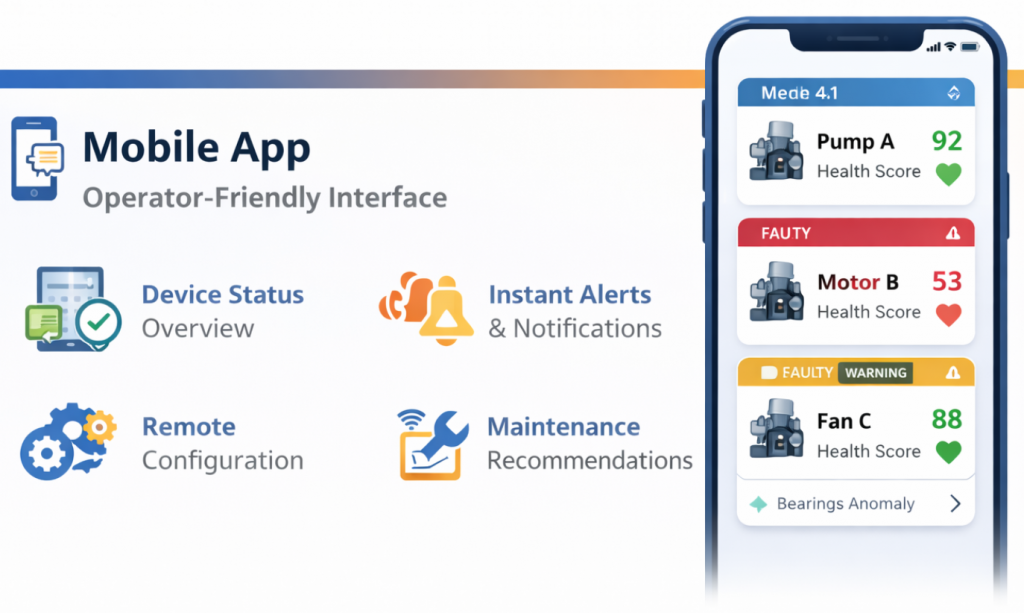
The mobile application allows the operations team to monitor equipment status anytime, anywhere, without needing to access a computer or SCADA system.
| Feature | Description | Key Benefits |
|---|---|---|
| Real-time Monitoring Anywhere | Quick overview of all connected machines, including live health score, device status, and active alerts. Operators can instantly check the entire production area from anywhere. | Faster visibility, remote access, full fleet awareness |
| Instant Alerts & Smart Notifications | Push notifications are sent directly to the mobile app when anomalies are detected, health score drops, devices go offline, or maintenance is due. | Immediate response, reduced downtime risk |
| Remote Configuration | Configure devices remotely: update sensor settings, adjust alert thresholds, enable/disable devices, and sync configurations with the cloud. | No onsite visits required, faster device management |
| Maintenance Guidance | AI provides actionable recommendations such as checking bearings or motors, suggested maintenance schedules, severity level, and first-step troubleshooting guidance. | Turns technical alerts into clear operator actions |
6. AI Model Dataset Management (Cloud → Edge)
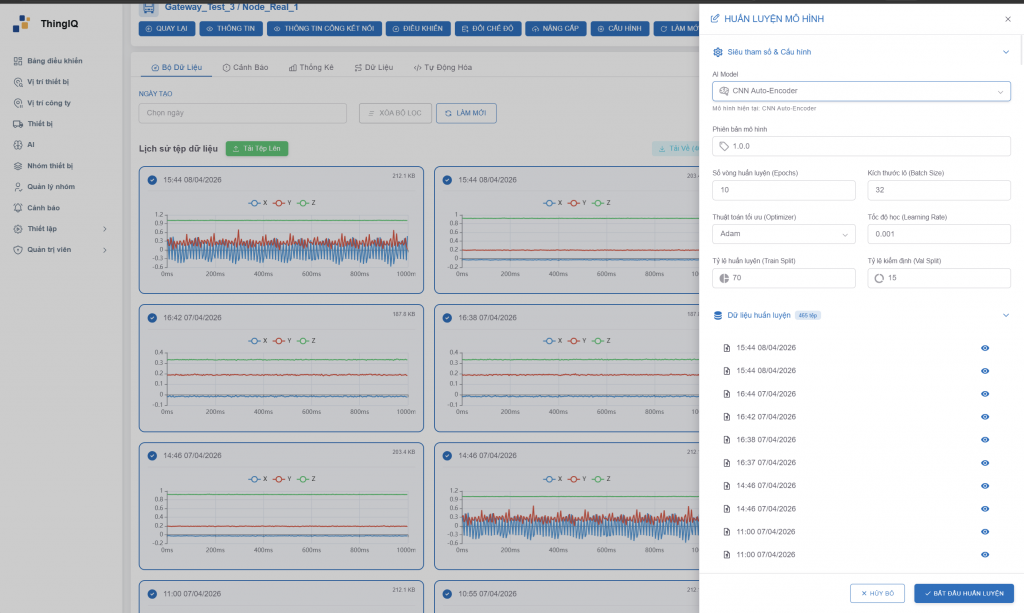
This is the heart of the entire solution, where industrial data is transformed into machine learning models that continuously improve over time. The system provides a complete AI lifecycle from data management, training, deployment to continuous learning, making the predictive maintenance platform increasingly accurate and adaptable to each machine type.
6.1.Dataset Management
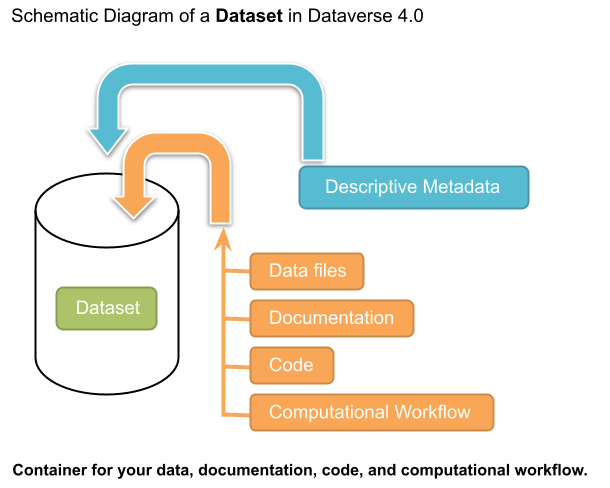
Industrial AI dataset includes data, metadata, documentation and training workflows
The cloud platform centrally stores all vibration data from equipment, including raw data, processed data, and anomaly event history. The system supports data labeling to classify operating states such as normal, bearing wear, imbalance, or misalignment, and allows for data aggregation from multiple factories and different machine types. The versioned dataset ensures traceability and compliance with industry standards, resulting in:
- Continuously improving AI models based on real-world data
- Ensuring traceability for the production environment
Industry 4.0 traceability systems can make automated decisions to optimize equipment and processes based on collected data, including predictive machinery maintenance. This is supported by smart sensors, AI controllers, RFID, and advanced data management software, which are being increasingly implemented by businesses. This is leading to new advancements in a future level of traceability.
6.2 Model Training Pipeline
The system supports the entire AI training process in the cloud. Data is collected from devices in streaming mode, then undergoes processing steps such as noise filtering, feature extraction (FFT, spectrogram), time-series normalization, and data window splitting. CNN, Autoencoder, and TinyML models are trained and optimized to achieve high accuracy while remaining suitable for ultra-low power devices.

Spectrogram of “Rice University”
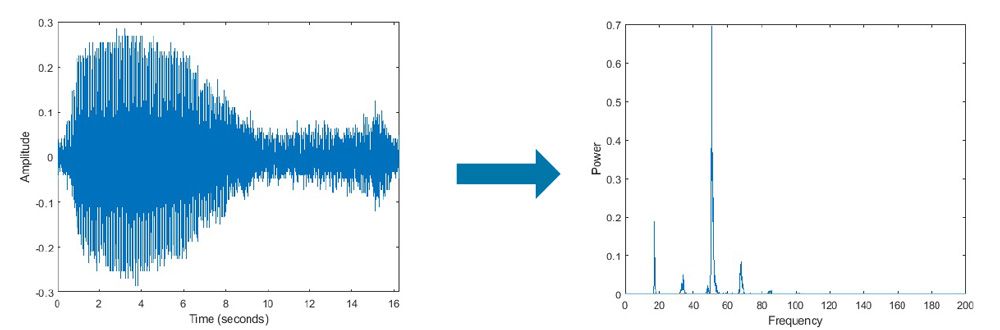
Fast Fourier Transform (FFT)
Optimal objectives:
- Small memory capacity;
- Low power consumption;
- High accuracy for error detection via filters or modulation.
6.3.Model Deployment to Device
After training, the model is quantized (8-bit/TinyML), converted to an embedded format, and deployed OTA to devices via gateway and BLE. AI updates can be performed remotely without on-site maintenance.
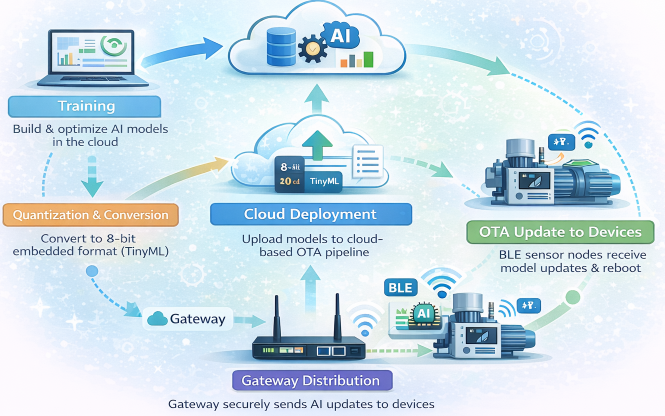
The process of deploying AI from the cloud to IoT/embedded devices is designed as a closed-loop lifecycle and can be operated entirely remotely. After data from the device is collected and sent to the cloud, the system processes, trains, and optimizes the AI model on a powerful computing infrastructure. The model is then quantized (TinyML), converted to a format compatible with the firmware, and deployed OTA via a gateway to devices in the field. When a new model is updated, the device immediately runs the new AI version and continues to send operational data back to the cloud, creating a loop: Device → Data → Cloud → Training → Model → Device. Thanks to this mechanism, the system can continuously improve accuracy, adapt to each machine, and update AI for thousands of devices without requiring on-site maintenance.
6.4.Continuous Learning Loop
The entire system operates in a continuous learning loop:
Device → Data → Cloud → Training → Model → Device
This loop helps to:
- Increase accuracy over time;
- Adapt to each machine type and operating environment;
- Reduce false alarms and detect errors earlier.
As a result, the platform becomes a self-improving predictive maintenance system capable of scaling at enterprise level.
7. Edge AI Inference (Real-Time, Offline)
After the model is deployed to the device, the entire AI inference process takes place directly on the MCU in the field. This allows the system to detect machine malfunctions in real time without relying on internet or cloud connectivity.
The AI performs continuous vibration signal analysis and delivers results in just milliseconds (latency < 10 ms). The device can operate reliably in harsh industrial environments where network connectivity is unstable or nonexistent.
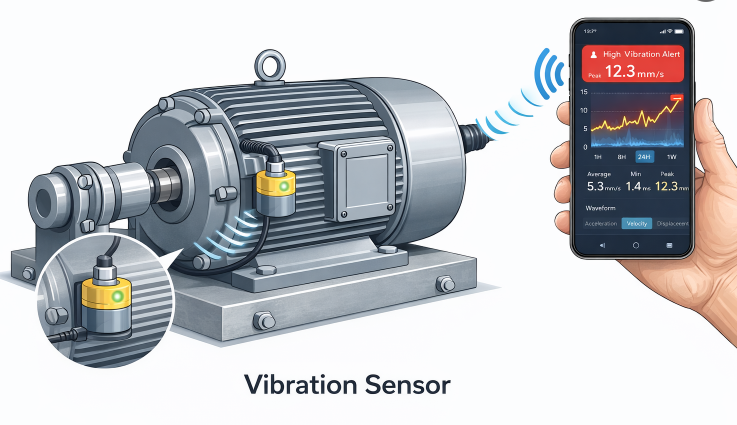
The inference results include:
- Fault classification
- Reconstruction error to assess the level of abnormality
- Byte-level fault status for the warning system
Thanks to fully AI-powered edge operation, the system ensures:
- Instant response to signs of failure
- No latency due to cloud data transmission
- High reliability for 24/7 operation in a production environment.
8. Security & Device Management
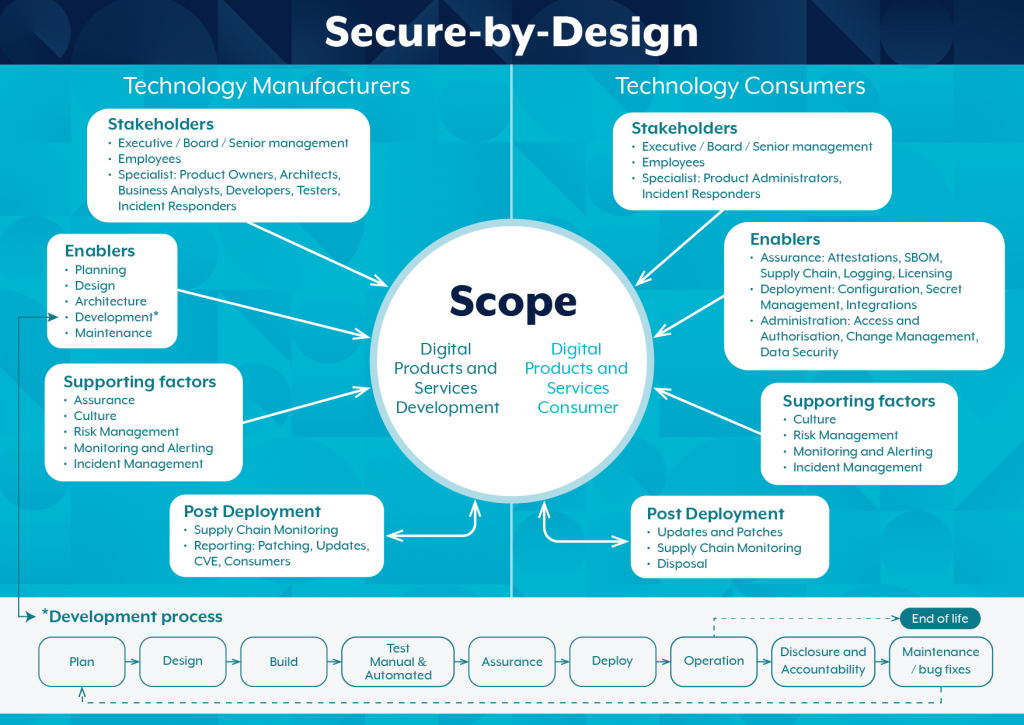
Secure-by-Design Ecosystem and Process Model
In the Industrial IoT environment, security and device management are essential to ensure safe operation on a large scale. The solution is designed with security-by-design principles, protecting data and devices from manufacturing through their entire lifecycle.
Secure Provisioning
Each device is assigned a digital identity from the outset via HTTPS and certificate-based provisioning. This ensures only legitimate devices can connect to the system.
Secure Communication – MQTT over TLS
All data transmitted between the device, gateway, and cloud is encrypted using TLS. This prevents eavesdropping, spoofing, or interference with data during transmission.
Device Authentication (HMAC-SHA256)
Each device uses a strong authentication mechanism based on HMAC-SHA256 to ensure that only legitimate devices can send data or receive control commands from the cloud.
Secure OTA firmware updates
Firmware and AI models are updated remotely via OTA with digital signature verification and integrity checks. This allows the system to patch security vulnerabilities and upgrade features without requiring on-site maintenance.
9. Custom IoT + AI Solutions by IES
Beyond the Voyager4 platform, IES delivers fully customized Industrial IoT and Edge AI solutions tailored to the unique requirements of each industry. From hardware and firmware to cloud platforms and AI models, the entire system can be designed, developed, and deployed as a unified end-to-end solution.

Custom Hardware
IES designs industrial-grade sensor nodes built for real-world environments. Solutions support multi-sensor integration, IP-rated enclosures for harsh conditions, and battery or solar-powered operation for large-scale deployments without complex power infrastructure.
Embedded Systems Development
Our embedded engineering team develops ultra-low-power firmware across multiple platforms, including FreeRTOS, Linux, and bare-metal systems. Devices can be equipped with flexible connectivity options such as BLE, Wi-Fi, LTE, and MQTT to seamlessly integrate into existing OT and IT environments.
Cloud & Platform Integration
IES provides deep cloud integration, including ThingIQ connectivity, custom APIs, and tailored dashboards. The platform can also integrate with enterprise systems such as ERP, CMMS, and SCADA to ensure seamless data flow across the organization.
AI Engineering Services
IES supports the complete AI lifecycle—from model design and optimization to TinyML deployment and industry-specific model development. This enables customers to bring AI into production quickly and efficiently.
“IES acts as an end-to-end technology partner for enterprise-scale Industrial IoT and Edge AI initiatives.”
10. Key Advantages (SEO + Sales Focus)
“IES delivers an Industrial IoT and Edge AI platform ready for enterprise-scale deployment.”
The IES Predictive Maintenance platform is designed to deliver measurable business value—from fast deployment and reliable operation to enterprise-scale scalability. These core advantages make IES a long-term technology partner for industrial organizations.
End-to-End Solution
IES provides a complete stack covering hardware, firmware, gateways, cloud platform, and the full AI pipeline. Customers can deploy a unified solution without coordinating multiple vendors.
Ultra-Low Power Design
Devices are optimized for long battery life of up to 1–3 years, enabling large-scale deployments without complex power infrastructure.
Edge AI Capability
AI runs directly on the device, enabling real-time fault detection without cloud dependency or network latency.
Full AI Lifecycle Support
The platform supports the entire AI lifecycle—from data collection and training to OTA deployment and ongoing model monitoring—allowing AI performance to continuously improve over time.
Enterprise Dashboard
A centralized dashboard provides real-time monitoring and historical analytics across multiple devices and sites within a single interface.
Customization Ready
The solution can be tailored to specific industries and machine types, accelerating the adoption of AI in real-world production environments.
11. Use Cases
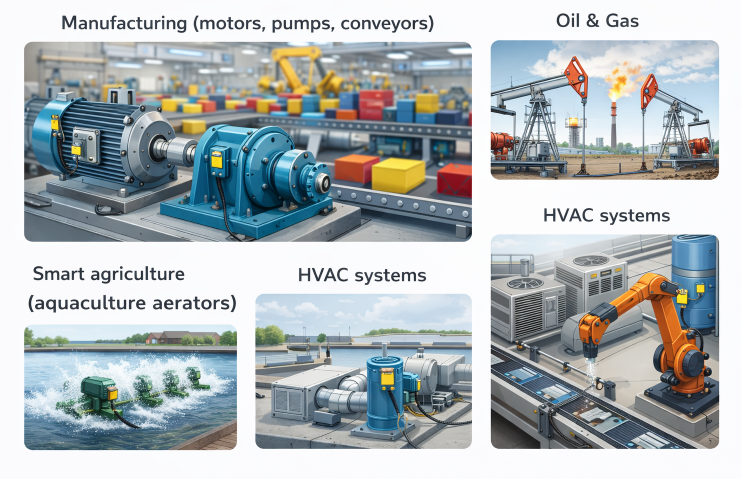
IES’ Predictive Maintenance solution is flexibly applicable to a wide range of industries, especially systems with rotating equipment or continuously operating machinery. Thanks to vibration monitoring and Edge AI capabilities, the system helps detect failures early and minimize downtime.
Manufacturing
In manufacturing plants, systems monitor the condition of motors, pumps, and conveyors to detect early mechanical failures, imbalances, or misalignments. This optimizes maintenance schedules and reduces unplanned downtime.
Oil & Gas
Rotating equipment such as pumps, compressors, and pipeline equipment often operate in harsh environments. Edge AI provides continuous monitoring and early warning of malfunctions to ensure safe operation.
Smart Agriculture
In aquaculture, systems can monitor water fans and aerators. Early fault detection helps avoid damage from sudden equipment shutdowns, ensuring a stable living environment for the animals.
HVAC Systems
Systems monitoring fans, compressors, and motors in HVAC systems optimize energy efficiency and reduce maintenance costs for buildings and industrial areas.
Industrial Automation
In automated production lines, real-time monitoring of equipment condition increases overall system reliability and reduces the risk of production line downtime.
📞 12. Call To Action

Our Mission
At Industrial Embedded Solutions, our mission is to help businesses unlock value through reliable embedded, IoT, and AI solutions. We deliver high-quality engineering services and build professional systems that meet the needs of both Vietnamese and global enterprises.
Company Information
Industrial Embedded Solutions Joint Stock Company
Registration code: 0318004045
Phone: +84 77 413 5678
Email: [email protected]
Address: 7A Thoai Ngoc Hau, Hoa Thanh Ward, Tan Phu District, Ho Chi Minh City, Vietnam
What We Do
We specialize in embedded systems, firmware, IoT platforms, and AI-enabled industrial solutions. Our team delivers end-to-end development—from hardware design and firmware to cloud platforms and edge AI deployment.